Google Translate
Finland's plummeting economy: from criticizing southern Europe to having more unemployment than Spain and almost more debt than Portugal
Finland was a role model for many European countries for years
In 2012 Finland criticized the aid given to southern countries; Helsinki wanted more in return.
Today, it leads the unemployment rate in Europe and its public debt is spiraling out of control.
For many years, Finland's economy was the star pupil that all of Europe envied and aspired to emulate. It boasted strong economic growth, highly competitive companies, a labor market with near-full employment, balanced public finances, and a very low debt-to-GDP ratio. Its privileged position allowed it to reprimand southern European countries during the euro sovereign debt crisis (2011-2013), demanding greater fiscal effort, further cuts, and austerity to balance their budgets. Some 15 years later, some of those southern countries might be lecturing or even reprimanding Finland itself.
Some might say revenge is a dish best served cold, and that's precisely what Southern Europe could be doing today. During the 2012 eurozone sovereign debt crisis, Finland, led by Finance Minister Jutta Urpilainen and Prime Minister Jyrki Katainen, adopted a rather uncompromising stance, demanding strict fiscal discipline from southern European countries , opposing unconditional bailouts, and requiring debtor nations like Greece and Spain to provide strong collateral (such as state assets or guarantees) in exchange for bailout funds. Furthermore, Finland sought to prevent the European Central Bank from purchasing these countries' debt.
More unemployment than Spain
Today, Finland has higher unemployment than Spain and is on track to surpass Spain's public debt levels. If the comparison is made with Portugal, the figures are even more striking. Portugal's unemployment rate is below 6%, while Finland's exceeds 10%. Regarding public debt, Portugal and Finland already have similar ratios of 89% to GDP. Spain, with 100% debt to GDP, still has a worse ratio, but only slightly; Finland's poor figures are bringing the Nordic country closer to Spain in terms of debt to GDP.
But beyond the cold data and quantitative narratives, it's worth examining some stories that may resonate with citizens and workers in Southern Europe. As Bloomberg reports, four years ago, Venla Malinen's professors assured her that she had made the right decision studying Building Architecture in the Finnish city of Kuopio. When she entered the job market, they told her, there would be more opportunities than she and her classmates could possibly handle. But now that she has her degree, this 24-year-old spends her days updating her resume, doing crossword puzzles, and cleaning.
“The hardest part is the uncertainty,” explains Malinen, who finished her studies in May and went straight to unemployment. “You don’t know when this will end or what you’re supposed to do next .” With the economy and public finances of this Nordic country in a very precarious state, its prospects are not exactly bright. Although this is a story and a particular situation in Finland, Sweden also faces some similar problems that are generating intense debate in the country.
In recent years, high interest rates and weak consumer confidence have paralyzed the Finnish real estate market , which in turn has slowed construction and hiring at architectural firms, engineering consultancies, and construction companies. Experienced architects and recent graduates now compete for the same jobs. When Malinen receives responses from potential employers, they all convey the same message: there are no jobs available, not even in the Helsinki region, where she currently lives.
And the competition isn't limited to jobs for college graduates. The fast-food chain Hesburger received nearly 27,000 applications for 1,200 seasonal positions, almost double the number from the previous year. The discount store chain Puuilo received 21,000 applications for just 400 positions, including applications from people with doctorates, according to Bloomberg.
Youth unemployment in Finland
Malinen is among the 25% of Finns aged 15 to 24 who are currently unemployed, according to Eurostat. For this group, unemployment is not only common but also increasingly prolonged: the number of people under 25 who have been out of work for more than a year has more than doubled between 2008 and the end of last year. Across all age groups, Finland has the highest unemployment rate in the European Union, exceeding 10%.
The Finnish economy, which has barely grown since the financial crisis, is in what Bloomberg describes as a "precarious" position. While public debt has steadily increased since 2009 (largely allocated to pensions, healthcare, education, and social benefits), the private sector has struggled, resulting in weak employment and low tax revenue. This has trapped the government in a near-infinite spiral, attempting to reduce debt by cutting spending , while unemployment benefits and other social assistance payments continue to rise as the economy steadily deteriorates. Even so, to reduce the national debt, the authorities have cut social benefits, but economists consulted by Bloomberg warn that these measures could further dampen the economy.
The problem is not new, but time is running out to solve it. At the beginning of this year, Finland was placed under the European Union's excessive deficit procedure and now needs to reduce its debt levels by 2028 or risk fines, the suspension of EU funds, and demands from Brussels to implement an even more restrictive fiscal policy. Finland's public debt is already approaching 90% of GDP, nearing the levels of Portugal.
Political pressure is also mounting. Although Finns generally support efforts to strengthen public finances, polls show growing discontent with how the cuts have been implemented. According to an April survey commissioned by the Finnish Business and Policy Forum, 52% of respondents believe that those dependent on social benefits have been disproportionately affected. As the social safety net weakens, concerns are growing that the country will become increasingly divided between those with resources and those without.
The fall of Nokia
For Roope Uusitalo, professor of economics at the University of Helsinki and former president of Finland’s Economic Policy Council, the roots of the country’s problems can be traced back to around 2010. That was when two of Finland’s major growth engines began to collapse almost simultaneously. Nokia, which around the turn of the millennium accounted for roughly 4% of Finland’s GDP and nearly a quarter of corporate tax revenue, lost its dominant position after Apple revolutionized the smartphone market. At the same time, the Finnish paper industry, for decades a mainstay of the country’s export economy, entered a prolonged decline as digitization drastically reduced the demand for newsprint.
Meanwhile, the working-age population began to shrink as the postwar generation retired. The country has not been able to attract enough immigrants to offset those losses. "When GDP is generated by workers, having fewer workers is a major problem," says Uusitalo.
Finland suddenly found itself collecting less tax revenue while simultaneously increasing its spending on pensions and healthcare, the costs of which grow year after year. Public finances thus went into the red, a situation in which they have remained for 17 consecutive years . Productivity, which during Nokia's golden years grew at double-digit rates, stagnated for more than a decade.
The pandemic only exacerbated these problems. Finland took on heavy debt to protect businesses and jobs and continued to do so even after the worst of the health crisis had passed. Subsequently, Russia's invasion of Ukraine decimated much of its trade and tourism with neighboring Russia and forced a dramatic increase in defense spending. The annual cost of servicing the public debt exceeded €3 billion. And Finland never managed to replace the industries it had lost.
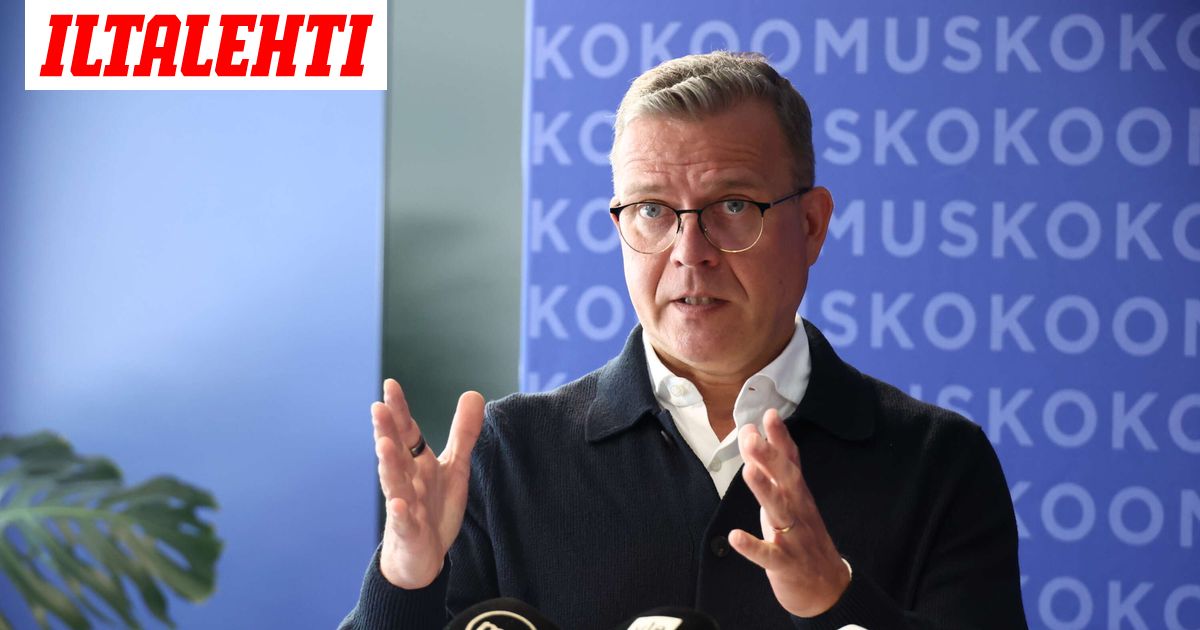
In 2023, Prime Minister Petteri Orpo's coalition government responded with one of the largest packages of welfare cuts and labor market reforms in decades. The government argued that Finland needed to strengthen incentives to work and generate permanent savings to curb debt growth. It also reduced income tax to stimulate the economy.
The immediate results fell short of targets. At the end of last year, Finnish household savings exceeded €115 billion, an all-time high, indicating that citizens remained reluctant to spend. Since then, unemployment has risen slightly.
For Uusitalo, it was no surprise. "Expectations of greater austerity increase uncertainty ," he explains regarding the relationship between spending cuts and hiring. "Households become more cautious, consumption weakens, and businesses face lower demand."
Public spending will have to be reduced sooner or later, she argues, but given that this adjustment can have counterproductive effects, there is a limit to the effectiveness of fiscal tightening. "There is no easy solution," she concludes. At the church in Hakunila, located in a multicultural suburb east of Helsinki, deacons Liisa Juusela and Heli Leskinen organize a weekly meeting for elderly people and other residents at risk of social isolation.
More than one in ten residents of the neighborhood receive Finland's last resort social assistance, which provides single adults with €578 per month for non-housing expenses, according to data obtained by Bloomberg . When that money runs out or an unexpected bill arises, people turn to churches and charities for emergency financial aid, food vouchers, and practical assistance.
Some of the beneficiaries are pensioners struggling to pay hospital bills. Others are unemployed adults, indebted working families, or students trying to navigate the social welfare system. Some households try to survive on little more than 200 euros a month for food and daily expenses.
"No one decides they want to live on social benefits or become a low-income pensioner," says Juusela. "People end up in those situations because of illness, disability, a family breakdown, or simply because life takes an unexpected turn."
Cuts to housing assistance over the past two years have also made it difficult for many people to afford rent. This is a radical shift for a country that, less than two decades ago, was credited with virtually eradicating long-term homelessness. Based on the idea that having stable housing is essential to solving other problems, Finland simply provided its own rental properties to homeless people, without requiring anything in return . In the 15 years following the implementation of the program, the homelessness rate was reduced by approximately half.
But that number began to rise again in 2025, following cuts to housing assistance. The number of homeless people jumped by almost a third compared to the previous year, while the number of people seeking help from churches increased by 40 percent, according to the country's main religious organization, the Evangelical Lutheran Church of Finland. The number of people whose debt payments are being seized by the state also surpassed 600,000 for the first time last year.
Finland still has work to do to meet the EU deficit target by the end of 2028, and its debt is projected to continue rising, approaching 100% of GDP by 2030. However, last year virtually all parliamentary parties backed a "debt brake," which will force future governments to limit public spending regardless of who is in power.
"This is the first time there has been broad political consensus that Finland's debt trajectory cannot continue indefinitely ," Uusitalo argues. The initiative has been welcomed by the Bank of Finland, international credit rating agencies, and investors.
In the short term, Finance Minister Riikka Purra says her party, the junior partner in the coalition, wants to reduce the deficit by continuing public spending cuts. Given the magnitude of the country's debt, she maintains that virtually no area can be excluded. Purra opposes raising taxes on labor or businesses, arguing that tax levels are already high.
Cut where you can't
Purra argues that the government has few alternatives left. "It's difficult to cut benefits for high-income earners because they don't receive them," he says in an interview. After years of weak growth, tentative signs of stabilization are also beginning to appear in the Finnish economy. Revised data showed GDP grew by 0.8% in 2025, while the country's central bank expects the recovery to continue with 0.7% growth this year, supported by stronger exports and investment and a gradual rebound in consumption. Households are also starting to feel more optimistic: consumer confidence rose in June to its highest level in more than four years.
However, the shift in this trend is slow, and Finns remain deeply pessimistic about the country's overall trajectory. Nearly seven out of ten believe Finland is heading in the wrong direction, according to a survey by the Finnish Business and Policy Forum, while 64% think fiscal consolidation must continue during the current legislative term . Discontent is particularly strong regarding unemployment, with the majority of respondents believing that political leaders are not doing enough to create jobs.